
Listen to the episode now or find us on Spotify and Apple Podcasts.
Show Notes
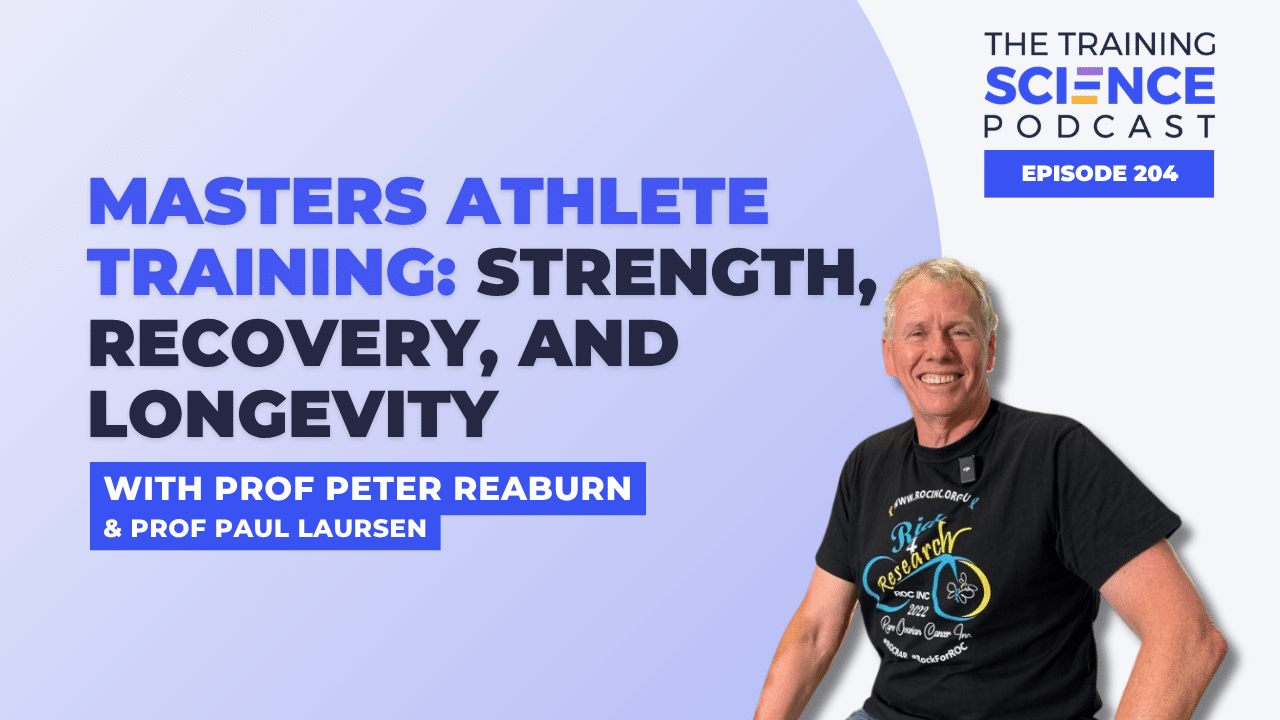
- Why resistance training becomes essential with age
Research on masters athletes shows that muscle mass declines even in highly trained endurance and sprint athletes. Strength training plays a critical role in maintaining muscle mass, preserving power, and supporting long term performance and health. - Understanding successful aging in athletes
Exercise supports not only physical health but also cognitive, psychological, and social well being. Masters athletes often score higher across all of these domains, highlighting how sport contributes to healthy aging. - Why training needs to change as you age
Athletes with long training histories eventually need new stimuli to continue adapting. Incorporating polarized training, short high intensity intervals, and resistance work can provide the stimulus older athletes need after years of endurance training. - Recovery changes and why masters athletes must respect it
Older athletes often experience greater muscle damage and slower recovery after intense sessions. Managing intensity frequency, prioritizing sleep, and allowing adequate recovery time become critical for sustaining performance. - The fundamentals that matter more with age
Sleep, protein intake, and active recovery become increasingly important for masters athletes. Adequate protein supports muscle repair and retention, while consistent sleep remains the most powerful recovery tool available.