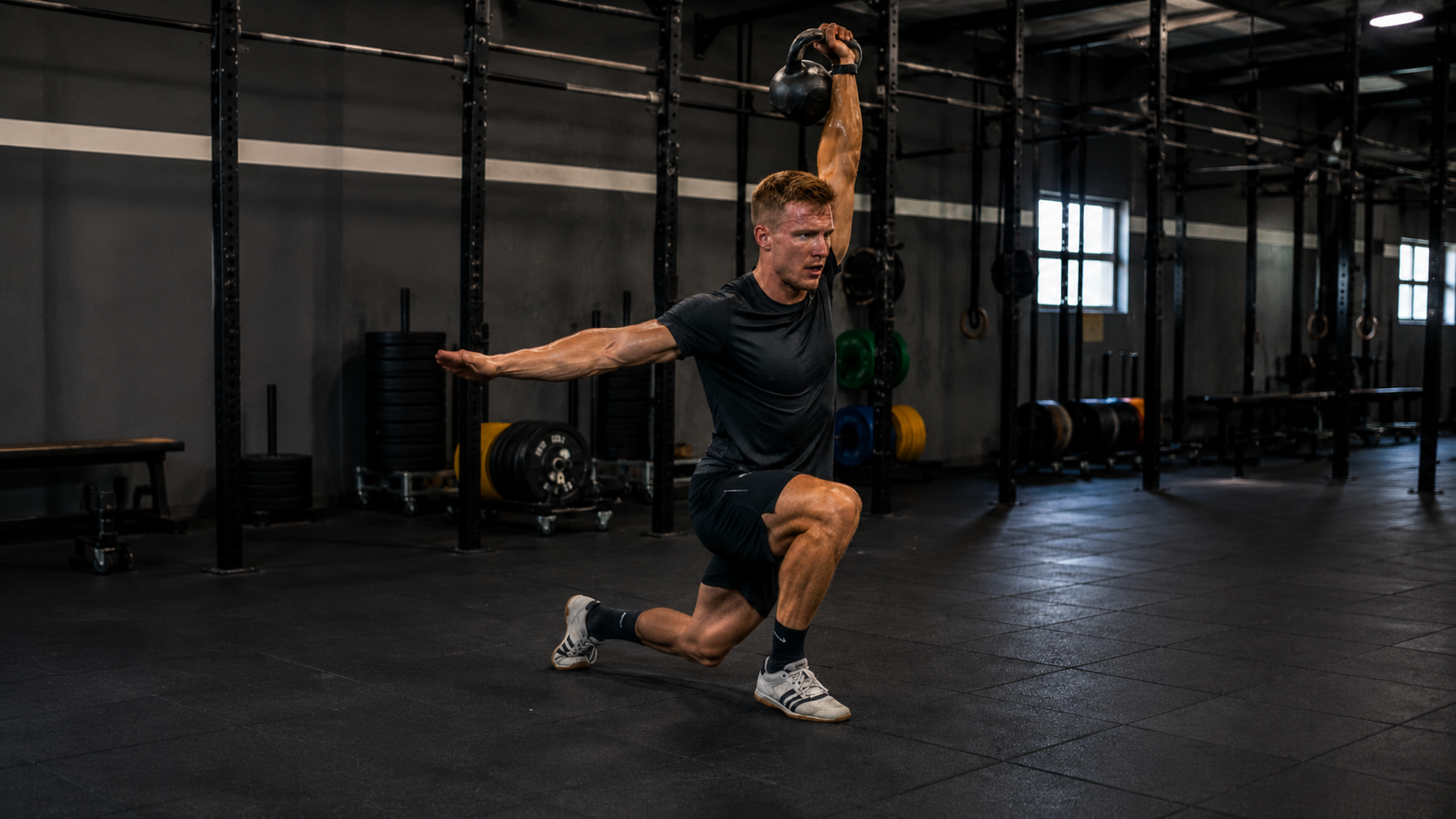
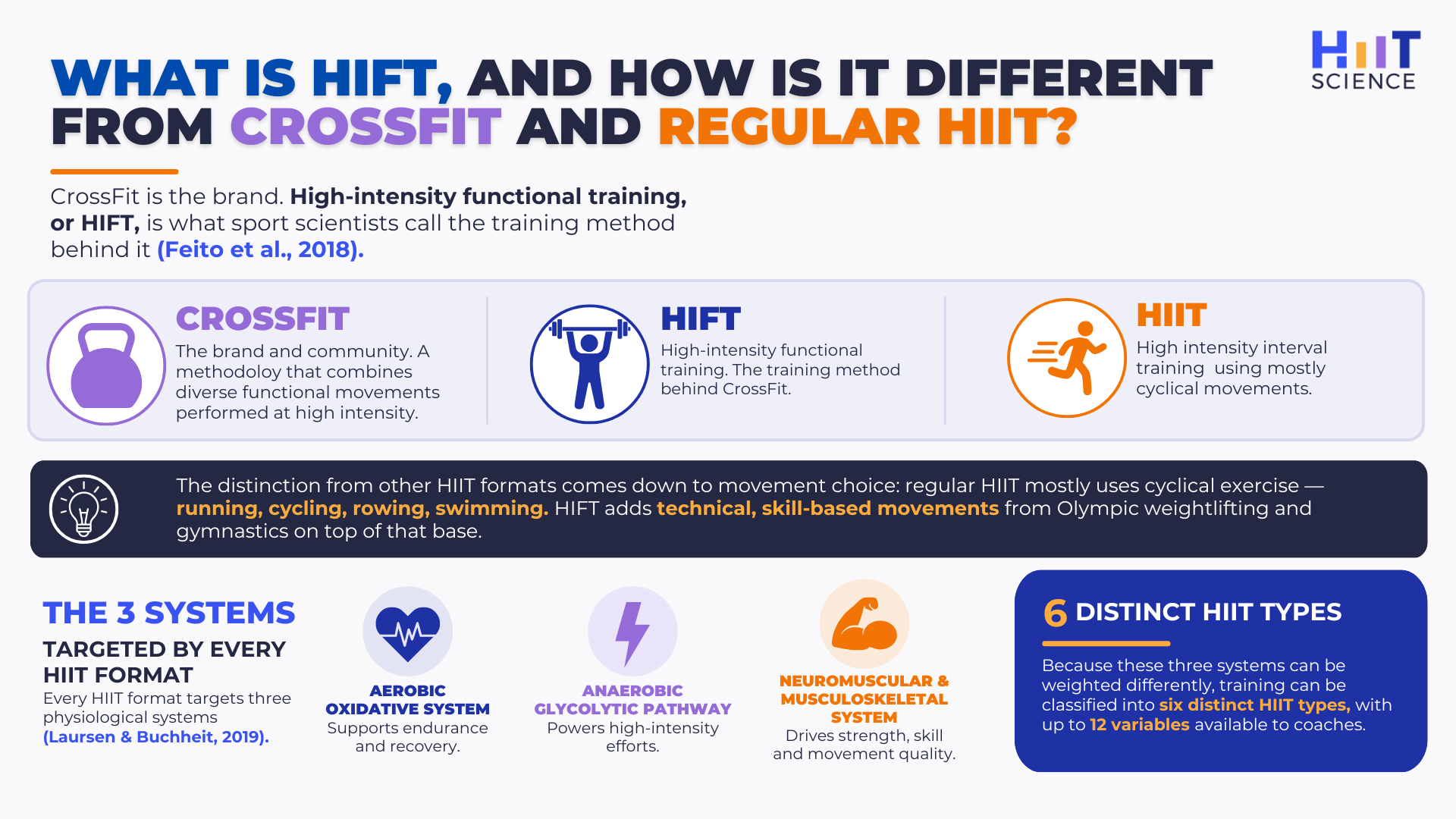
High-Intensity Functional Training, or HIFT, is the sport science term for what most people know as CrossFit™-style training (2). It’s a form of HIIT, but instead of relying on cyclical movements like running or rowing, it pulls in technical work from Olympic weightlifting and gymnastics. The result is a session that can load your aerobic system, your anaerobic system, and your neuromuscular system at the same time.
HIFT combines cyclical exercise with weightlifting and gymnastics movements to train the aerobic, anaerobic, and neuromuscular systems simultaneously (2).
Where HIFT fits among the HIIT formats
HIIT isn’t one thing. The category includes short intervals, long intervals, repeated sprint training, sprint interval training, and game-based HIIT, and HIFT is the newest addition to that list (4). What separates it from the others is the exercise selection. A rower doing 30-second sprint intervals is training the same three physiological targets (aerobic, anaerobic, and neuromuscular) as someone doing a HIFT workout. The rower is just training them one at a time, spread across cyclical output. HIFT tries to hit all three in a single, compressed session.
If you coach or program HIIT, the six-format framework gives you a way to pick the right tool for the goal instead of defaulting to whatever felt hard last time.
Does exercise choice change what HIFT trains?
Barbell work and gymnastics movements don’t just add variety. They change the demand.
Research comparing different HIFT exercise modalities found similar aerobic responses (around 90% of HRmax) and similar anaerobic responses (blood lactate between 10 and 12 mmol/L) across formats (6, 7). But the neuromuscular load told a different story: Olympic weightlifting and gymnastics movements produced a noticeably higher neuromuscular load than cyclical exercise performed on its own (6). Two workouts can look metabolically identical on paper and still tax your muscles and nervous system very differently.
If your legs feel wrecked after a barbell-and-gymnastics WOD but your heart rate data looks the same as an easy row, that’s not in your head. The neuromuscular cost is real, and it’s the part most heart-rate-based tracking misses.
How hard, and how long, should a HIFT session be?
HIFT breaks most of the usual intensity tools. You can’t calculate someone’s VO2max off a set of muscle-ups, and a push-up doesn’t have a 1RM. So researchers tested rating of perceived exertion (RPE) as a control method instead (8). Athletes who were told to hold RPE 6 on the Borg CR-10 scale, rather than go all-out, completed fewer repetitions and produced lower blood lactate. Their percentage of HRmax, though, stayed roughly the same as the all-out group (8).
Duration matters less than you’d expect. A study comparing a short HIFT workout (under 5 minutes) to a long one (15 minutes) found no meaningful difference in the aerobic or anaerobic response between them (3). A short, brutal session and a long grind can land in a similar physiological place.
Capping effort at a submaximal RPE (6–8 out of 10) is a legitimate way to build the aerobic side of HIFT without stacking on unnecessary anaerobic fatigue. That’s useful for athletes who need the stimulus but not the multi-day recovery cost.
How much rest do you actually need between rounds?
Most HIFT programming skips prescribed rest periods entirely. You get a rep scheme or a time cap, and the rest between rounds is up to you (2). But rest isn’t a detail to ignore. It’s what determines whether you can reproduce the intensity needed to actually drive adaptation (1), and HIFT’s skill-heavy movements (a snatch, a muscle-up) fall apart fast under accumulated fatigue (5).
Longer rest periods push the session toward an aerobic, low-anaerobic response. Shorter rest periods do the opposite, pulling the workout toward a higher anaerobic and neuromuscular demand (4).
Rest length is a dial, not a formality. Extend it when you need clean technique and aerobic development. Compress it when the goal is anaerobic capacity, and accept that your barbell cycling will get worse as a trade-off.
Is HIFT good programming for elite athletes?
Not automatically. Laursen and Buchheit describe this with what they call the toothpaste theory (4). Squeezing from the middle of the tube, training metabolic and neuromuscular qualities at once the way HIFT does, gets you some of both qualities, but not the full amount of either. Highly trained athletes chasing a specific adaptation usually need to separate their HIIT work from their strength, power, and speed work to get the full result from each. Concurrent training research also raises the possibility of an interference effect, where the two adaptations compete for the same recovery window (see chapter 7 of the HIIT Science Book).
Used with intent, HIFT still has a place in an elite athlete’s plan, as long as each session serves a specific purpose.
What HIIT “type” does HIFT usually fall into?
Laursen and Buchheit’s classification sorts HIIT sessions into types based on their aerobic, anaerobic, and neuromuscular signature (4). Most HIFT sessions land in Type 4, the category defined by very high neuromuscular load layered on top of the metabolic demand. That’s a direct result of the barbell and gymnastics work. It’s also the reason HIFT can deliver so much training stimulus in so little time, and why it needs more careful recovery planning than a Type 1 or Type 2 session would.
Where Hyrox fits into this picture
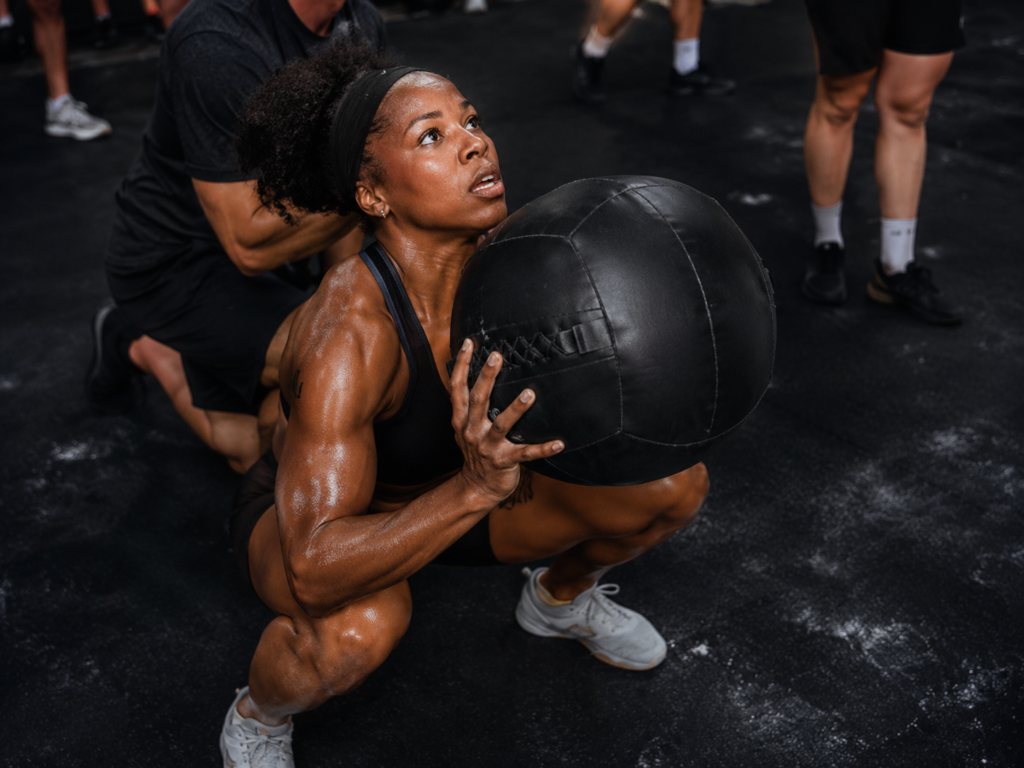
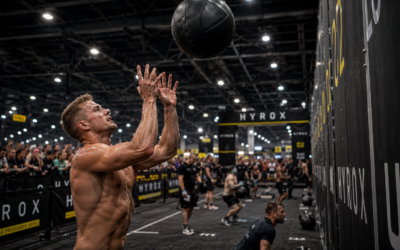
Hyrox is a useful real-world case study, because it’s built on the same three-system demand as HIFT, just weighted differently. Breaking down the men’s and women’s pro world records shows that roughly 70% of total race time is endurance-based (running, skierg, or rowing), with running alone accounting for more than half (Seiler-Viken, Fast Talk Labs, 2025). The strength component matters, but in Hyrox, endurance outperforms max strength every time.
That’s the same logic behind HIFT’s variable manipulation. Want more of an endurance signature in your training? Lean on cyclical modality, longer rest, and controlled RPE. Want more anaerobic and neuromuscular demand? Shorten rest and add barbell and gymnastics volume. The tools are the same. The dial just gets set differently depending on the sport.
If you’re training for Hyrox specifically, Athletica’s Hyrox plans build that dial into your periodization automatically, based on where your engine and your strength currently stand.
Get more of this
HIIT Science breaks down research like this every week for coaches and athletes who want their programming decisions backed by data instead of guesswork. Join the community to get the next breakdown.
Curious what’s new in HIIT Science’s course library? Click here
If Hyrox is on your calendar, check out Athletica’s Hyrox training plans.
References
- Bishop, PA, Jones, E, and Woods, AK. Recovery from training: a brief review. J Strength Cond Res 22: 1015–1024, 2008.
- Feito, Y, Heinrich, KM, Butcher, SJ, and Poston, WSC. High-Intensity Functional Training (HIFT): Definition and Research Implications for Improved Fitness. Sports 6: 1–19, 2018.
- Kliszczewicz, BM, Williamson-Reisdorph, C, et al. Autonomic response to a short and long bout of high-intensity functional training. J Sports Sci 36: 1872–1879, 2018.
- Laursen, P and Buchheit, M. Science and Application of High-Intensity Interval Training. Human Kinetics, 2019.
- Mangine, GT, Van Dusseldorp, TA, Feito, Y, et al. Testosterone and Cortisol Responses to Five High-Intensity Functional Training Competition Workouts in Recreationally Active Adults. Sports 6, 2018.
- Maté-Muñoz, JL, Lougedo, JH, Barba, M, et al. Cardiometabolic and Muscular Fatigue Responses to Different CrossFit Workouts. J Sports Sci Med 17: 668–679, 2018.
- Maté-Muñoz, JL, Lougedo, JH, Barba, M, and García-Fernández, P. Muscular fatigue in response to different modalities of CrossFit sessions. PLoS One 12: 1–17, 2017.
- Tibana, RA, de Sousa, N, Prestes, J, et al. Is Perceived Exertion a Useful Indicator of the Metabolic and Cardiovascular Responses to a Metabolic Conditioning Session of Functional Fitness? Sports 7, 2019.
- Seiler-Viken, S.A. Performance determinants of HYROX competition. Fast Talk Labs, 2025.
Monitoring Load and Response in Elite Football
Unlock Your Team’s Potential with Martin Buchheit’s Science-Proven new Course