Monitoring Load and Response in Elite Football
The question isn’t how much data you have. It’s whether you know what it’s telling you.
Connect, Don’t Collect
Technology in elite football has never been more capable. Wearables, GPS, heart rate monitors, force plates… there’s almost nothing we can’t measure anymore.
And yet, in most environments, the gap between what the data shows and what actually informs a decision remains significant.
Martin Buchheit has spent over 15 years building monitoring systems that close that gap – at Paris Saint-Germain, Lille, Lyon, and Aspire Academy. This course is that framework, rebuilt for where the field is now in 2026.

Course Overview
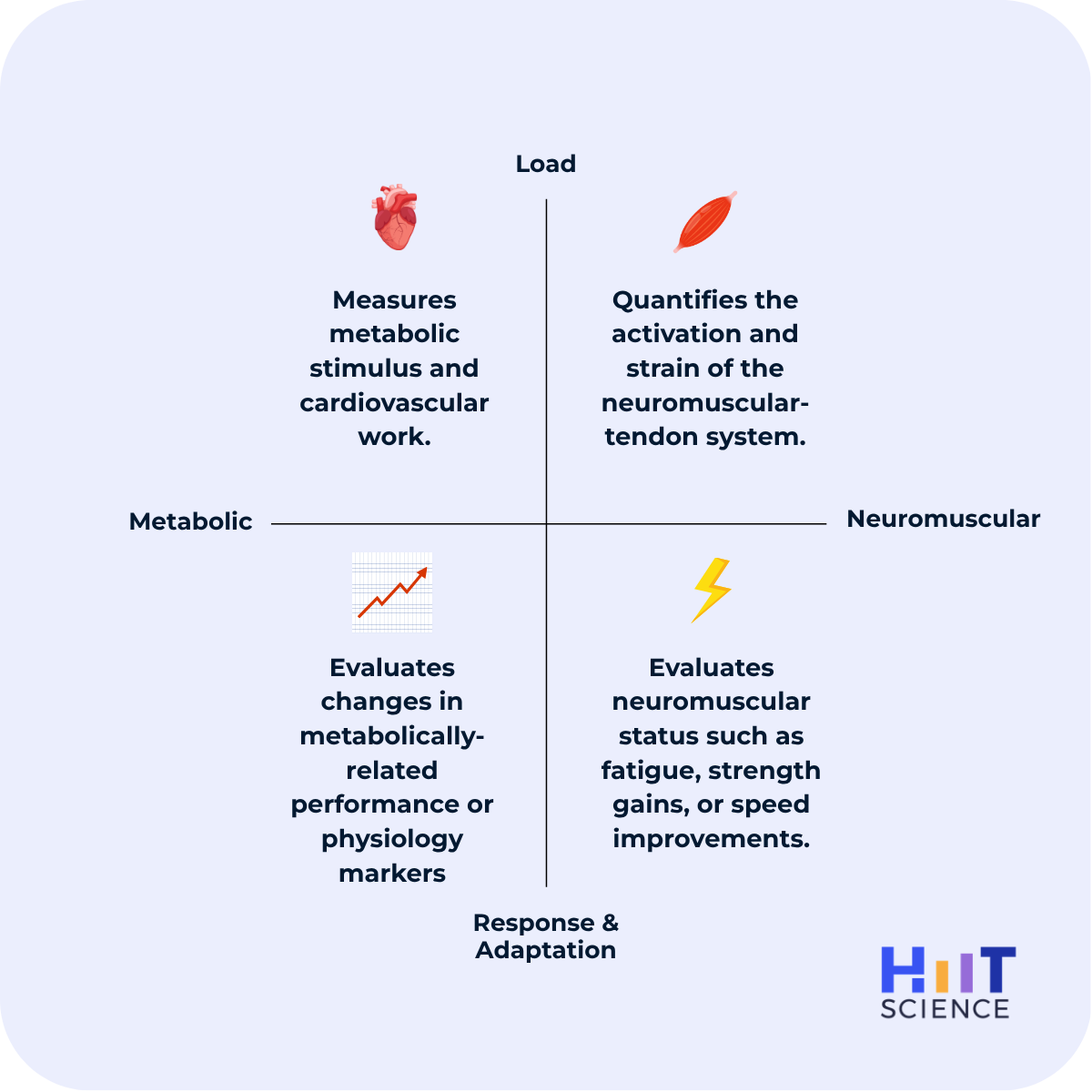
This course is built around a single organising principle: the distinction between the load you prescribe and the biological response it produces. These are not the same thing, and confusing them is one of the most common sources of poor decision-making in elite football environments.
Using a simplified four-quadrant model that separates neuromuscular from metabolic, and load from response, the course gives practitioners a clear framework for understanding what each tool is actually measuring, where it falls short, and how to connect the pieces into a system that genuinely informs training decisions.
Here’s what you’ll unlock in each lesson:
The Quadrant Model
A simplified framework that separates neuromuscular from metabolic, on both the load and response side. Every tool and metric covered in the course is mapped to its place within it.
Neuromuscular Load
From EMG-embedded shorts to differential RPE and velocity-based training (VBT), the course covers what is currently available, what is scalable across a full squad, and what is not… including an honest assessment of which technologies have earned a place in a minimum viable setup and which ones haven’t.
Metabolic Load
GPS is not a measure of metabolic load. The course explains exactly what it does and doesn’t capture… including why metabolic power derived from GPS simply doesn’t work, why the ADI analyzer captures up to 70% more mechanical work than conventional GPS metrics, and what heart rate monitoring, used correctly, can actually tell you.
Overall Load
How to use RPE properly, why the original Foster scale matters, and why adding colours and emojis to the scale actively reduces its reliability.
Neuromuscular Response
Practical frameworks from creatine kinase monitoring at PSG to thermography, force plates, encoders, VBT, and accelerometer-derived running signatures… with real examples of how these were applied and interpreted in elite environments.
Metabolic Response
A deep dive into submaximal heart rate monitoring, developed from over 20 years of applied work starting in handball in 2005 through to PSG, Lille, and beyond. Plus Martin’s personal journey with HRV, including seven years of daily self-monitoring, and an honest account of where it is and isn’t the right tool in elite football.
Overall Response
Wellness and fatigue monitoring done right. Why simple, well-administered questions outperform elaborate apps, and how to use subjective data alongside objective measures without one undermining the other.
Putting It All Together
From an Adelaide Crows spreadsheet in 2013 to modern AMS platforms at Lille. How to build a monitoring dashboard that shows you load, response, and the relationship between them at a glance – without creating noise.
Part 9: Profiles and Individualization
One size doesn’t fit all in conditioning.
You’ll learn:
- How to profile athletes and tailor HIIT for speed vs. endurance.
- Ways to modulate neuromuscular load for explosive players.
- Practical strategies for individualizing group sessions.
This is just a taste of what’s inside
The full course gives you the complete framework, tools, and templates to transform your approach to conditioning.
Why This Course, and Why Now
The original version of this course was published in 2019, built on the book from 2018. A lot has changed since then.
New technology has arrived. New research has been published. And Martin has continued applying and refining this framework across elite environments in Europe and the Middle East.
This updated course reflects all of that… including Martin’s most recent published work on low-frequency fatigue monitoring across all six HIIT Types, data that didn’t exist when the original course was built, the ADI analyzer and why mechanical work captures up to 70% more than conventional GPS metrics, and the latest thinking on how to structure a monitoring system that is both scientifically grounded and operationally realistic.
This is a living course. As new research and applied insights come out, the course gets updated… and every update is included with your enrollment, always.

Advance Your Career
Why Take a HIIT Science Course?
Principles Over Protocols
This is not a checklist of metrics to collect. It is a framework for understanding what each tool is actually measuring, where it falls short, and how to make better decisions with the information you already have.
Grounded in 15 years of elite application
Who’ve tried traditional drills, Tabata, or HR-based conditioning but need clarity and results.
Buy once, get every future update.
This course is a living resource… as the field evolves, the content evolves with it, at no extra cost.
Earn Continuing Education Credits
Accredited by:





The data is already there. This course teaches you how to read it.
Every future update is included… you buy once and the course grows with the field.