Harnessing Heat
Dr. Martin Buchheit’s course on using heat as a training stimulus for healthy and injured athletes, and how to set it up with a spare room, a few heaters and a thermometer with a humidity reading.
Harnessing Heat
Dr. Martin Buchheit’s course on using heat as a training stimulus for healthy and injured athletes, and how to set it up with a spare room, a few heaters and a thermometer with a humidity reading.
A heart rate monitor and a power meter can tell two different stories
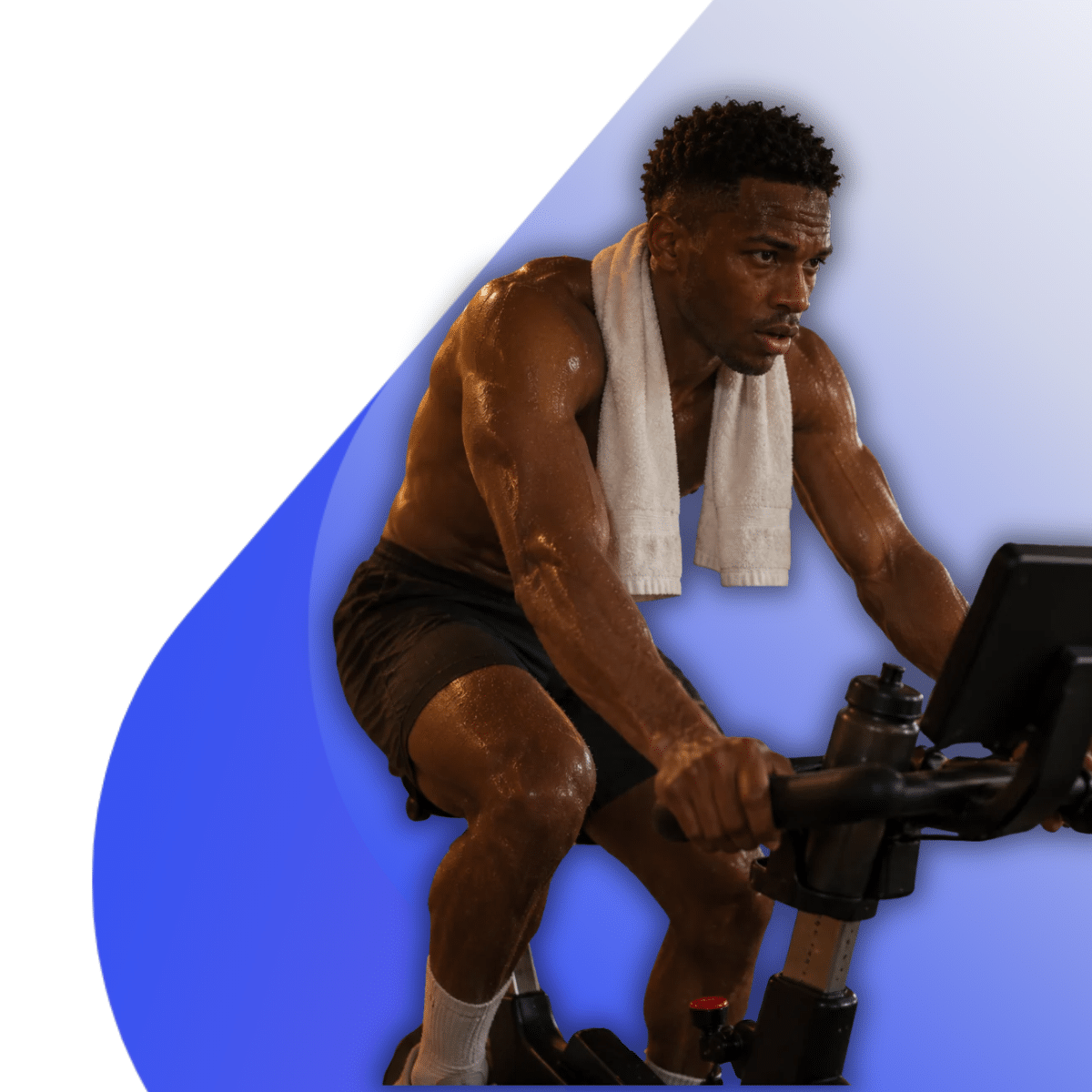
Eleven well-trained cyclists were asked to hold the same heart rate. In a temperate room, that took about 200 watts. At 33°C and 78% humidity, they had to drop below 100 watts to stay there.
The power file reads like a recovery ride. The heart says otherwise.
That gap is what this course is about. In the heat, the internal load on the athlete goes up (heart rate, plasma volume, muscle signalling) while the external load goes down (watts, speed, steps). For a coach, that means a way to ask for aerobic work without paying for it in mechanical load.
Where this matters most
The injured player who cannot run yet and is losing aerobic fitness by the week.
- The player short of minutes who needs more cardiovascular work than the matches give.
- The squad in a congested week with no room for another hard session on the legs.
- The coach who thinks heat work needs a chamber and a budget.
Martin has run heat rooms at PSG, Lille and Aspetar for more than ten years, for exactly these cases. This course is the lecture he gives to teams, with the studies on screen and the numbers he works from.
What you will be able to do after five lessons

Advance Your Career
Built for the people who plan the week
Sport scientists, S&C coaches, physios and rehab staff in team sport.
Endurance coaches and informed athletes who want a stimulus that is not more volume.
Anyone who has read about heat acclimation and wondered whether it could do more.
You do not need a heat chamber. You need a room, a couple of heaters and a thermometer with a humidity reading.
Inside the Course
Five lessons, cut from the lecture Martin gives to teams.
Lesson 1 · Why heat works
Heat camps raised fitness even when athletes were tested back in the cool: Danish first-division players, French swimmers after Guadeloupe, a Carlton AFL camp in Doha. Then Lundy matched the training work between groups, and the heat group still gained more.
Lesson 2 · What heat does to the body
The expected adaptations: plasma volume, heart rate, temperature control. And the one Martin did not expect. In rodent studies, heat limited the loss of muscle size and aerobic function during immobilisation, and heat alone raised citrate synthase about as much as exercise did.
Lesson 3 · Same stimulus, less load
The working tool of the course. The heart-rate clamp that needed about 60% less power at heat index 50. The AFL players who rode 30% fewer watts for the same gain. Heat in return to play, and what it cannot do.
Lesson 4 · A heat room on any budget
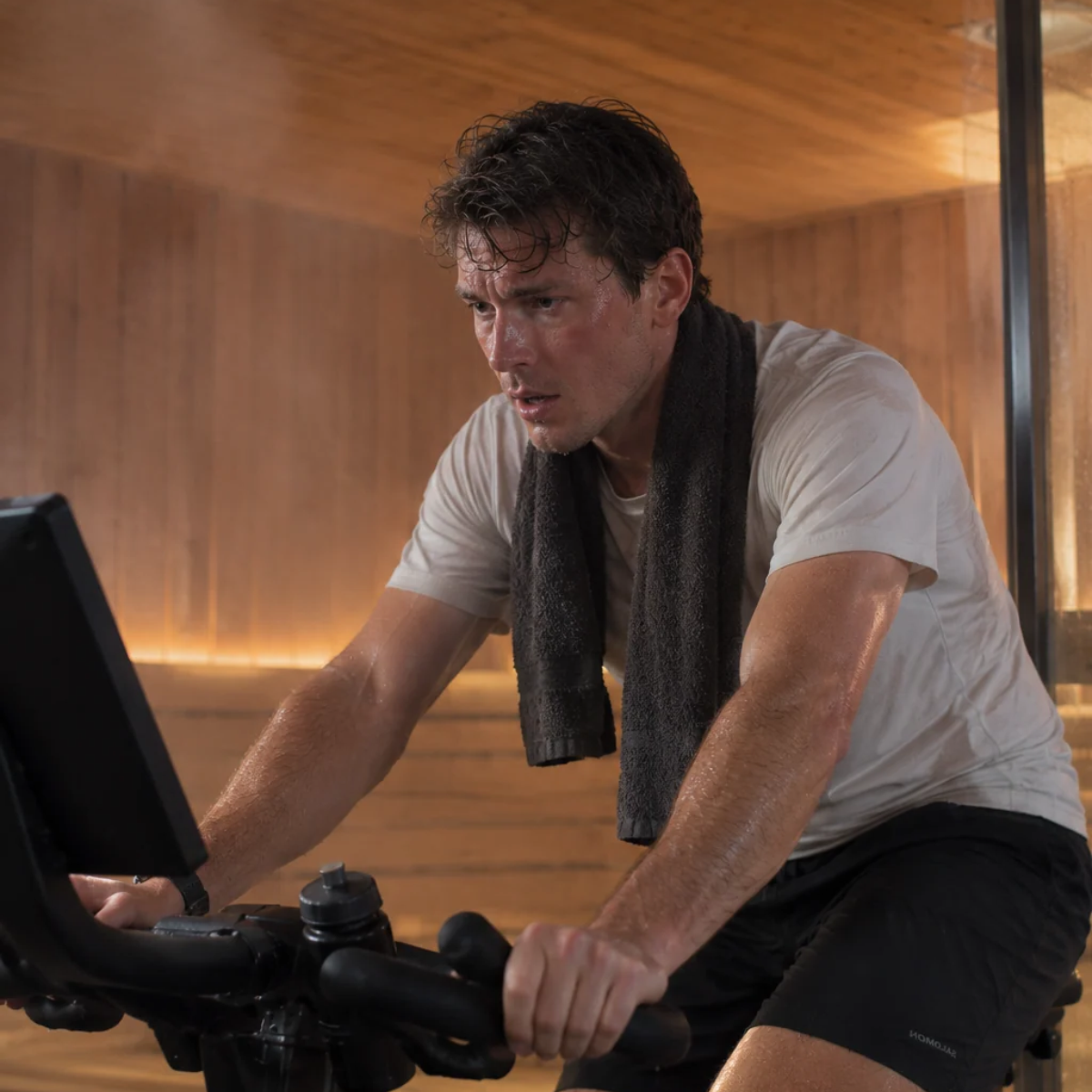
A bike in the PSG sauna. The chambers at PSG and Aspetar. Four supermarket heaters in Lille. Ceiling heaters in the Optimo clinics. The Doha sun. The Heat Room Checklist comes with this lesson.
Lesson 5 · Session design and programming
Martin’s framework, step by step: heat index 45 to 60, pre-warm, five minutes at 50 W, 25 to 45 minutes of work, intensity by heart rate and RPE, long intervals. Then the block and the week: how often, how many days in a row, and where cold water fits around strength work. The Heat Session Builder and Log comes with this lesson.
Martin is upfront that part of this runs ahead of the published research and comes from trial and error in clubs and clinics. Where that is the case, he says so.

About your instructor
Martin Buchheit, PhD
Martin is a sport scientist who has run heat rooms and performance programmes at Paris Saint-Germain, Lille and Aspetar, and works with the Optimo clinics in Spain. He co-founded HIIT Science with Dr Paul Laursen and co-authored the textbook Science and Application of High-Intensity Interval Training.
His interest in heat began in Doha in 2011, when a group of Danish first-division players came home from a five-day camp in the heat about 7% better on the Yo-Yo test. The course follows that result through the research and into the clubs.
What you Get

Questions We Hear Most
Do I need a heat chamber?
No. Lesson 4 is about finding the heat with what you have. Four supermarket heaters took Lille’s old steam room to 50°C. A sauna that fits a bike, a spare room with a few heaters, or a hot summer day outside can all work.
How much of this is proven?
Martin is clear about it. The course draws on published studies, shown on screen as he presents them, and on his own experience in clubs and clinics. Where the programming comes from trial and error rather than research, he says so.
Is this for coaches or athletes?
It is written for coaches and practitioners. An informed athlete who trains with power and heart rate will follow it without trouble.
Can I use heat with an injured player?
That is one of the main uses. Martin covers heat in return to play and where he would and would not use it. His rule: not while there is bleeding or swelling, and with care around tendons. Medical clearance comes first, as always.
Does the course have subtitles?
Yes. Every lesson has subtitles in English, German and Spanish.
Build Your First Heat Session This Week
You probably have what you need already. The course shows you how to turn it into a session, and the session into a week.
Launch price
Harnessing Heat: $57 → $97 from November 8
Save 41%
Day(s)
:
Hour(s)
:
Minute(s)
:
Second(s)
One payment. Lifetime access. Five lessons, four working tools.
Get Insider Access
Sign-up for our monthly newsletter